Table Of Content
Use existing data and data analysis to try and identify the most logical factors for your experiment. Regression analysis is often a good source of selecting potentially significant factors. In a conjoint analysis DOE, you would create mockups of the various combinations of variables. A sample of customers were selected and shown the different mockups. After viewing them, the customer then ranked the different mockups from most preferred to least preferred.
Statistical Design of Experiment (DoE) based development and optimization of DB213 in situ thermosensitive gel for ... - ScienceDirect.com
Statistical Design of Experiment (DoE) based development and optimization of DB213 in situ thermosensitive gel for ....
Posted: Sun, 25 Mar 2018 07:00:00 GMT [source]
main types of DOE designs, explained
Hands-on DOE Project Support will help to build and deploy your DOE process throughout the entire organization. By utilizing our experienced Subject Matter Experts (SME) to work with your teams, Quality-One can help you optimize your processes with DOE methodology and promote continuous improvement thinking in your organization. Once the factors have been identified, the team must determine the settings at which these factors will be run for the experiment. The example of baking a cake demonstrates that some factors are measured in numbers, such as oven temperature and cooking time.
School's out... and so is OFAT (one-factor-at-a-time) experimentation.
You can use fractional factorial designs when you have a large number of factors to screen, or where resources are limited. Design of experiments (DOE) is a systematic, efficient method that enables scientists and engineers to study the relationship between multiple input variables (aka factors) and key output variables (aka responses). It is a structured approach for collecting data and making discoveries. It is best that a process be in reasonable statistical control prior to conducting designed experiments. Investigators should ensure that uncontrolled influences (e.g., source credibility perception) do not skew the findings of the study. Manipulation checks allow investigators to isolate the chief variables to strengthen support that these variables are operating as planned.
New ambr Bioreactor Systems Enhanced With Software For Design Of Experiments(DoE) - BioProcess Online
New ambr Bioreactor Systems Enhanced With Software For Design Of Experiments(DoE).
Posted: Wed, 25 Feb 2015 08:00:00 GMT [source]
The Experimental Plan
The technique allows you to simultaneously control and manipulate multiple input factors to determine their effect on a desired output or response. By simultaneously testing multiple inputs, your DOE can identify significant interactions you might miss if you were only testing one factor at a time. DOE statistical outputs will indicate whether your main effects and interactions are statistically significant or not. You will need to understand that so you focus on those variables that have real impact on your process.
What is Design of Experiments (DOE)? Your Method to Optimize Results
DOE helps reduce the time, materials, and experiments needed to yield a given amount of information compared with OFAT. Design of experiments allows you to test numerous factors to determine which make the largest contributions to yield and taste. For example, it isn't possible to fully understand the functional consequences of changing a protein's structure without understanding all the contexts in which it appears. Its interactions within biological networks are what really define its function, so even minor changes can produce a plethora of unpredictable down- and upstream effects. Most biological processes are complicated, complex, and multidimensional.7 So, changing one factor probably changes something else.
Evaluate the effect of change/s
Blocking is a technique to include other factors in our experiment which contribute to undesirable variation. Much of the focus in this class will be to creatively use various blocking techniques to control sources of variation that will reduce error variance. For example, in human studies, the gender of the subjects is often an important factor.
What does “main effects” refer to?
DOE and supporting CAB technologies are poised to transform the biological research landscape, uncovering new insights from data and ensuring biological research is more robust and precise than ever. If you’re struggling with statistics while analyzing data for your projects, this is your ultimate solution for Data Analysis! Explore essential techniques in data transformations for normality to unlock true insights and enhance your statistical analysis.
Discussion topics when setting up an experimental design
In this design, the factors are varied at two levels – low and high. An understanding of DOE first requires knowledge of some statistical tools and experimentation concepts. Although a DOE can be analyzed in many software programs, it is important for practitioners to understand basic DOE concepts for proper application. RSM designs allow you to build a predictive model of your system’s response surface.
Even though we have an immediate application in mind, there will be other uses in future that will probably vary in one way or another. Understanding if processes can adapt to these in principle, future-proofs the system and saves expensive development time. We usually talk about "treatment" factors, which are the factors of primary interest to you. In addition to treatment factors, there are nuisance factors which are not your primary focus, but you have to deal with them. Sometimes these are called blocking factors, mainly because we will try to block on these factors to prevent them from influencing the results. In this case the actual F value for the three factors (brand, time and temperature) are below the critical F value for 1 percent (16.47).
Interactions between experimental factors are everywhere in bioprocessing but, with traditional experimentation, they are hard to investigate, and often go ignored or unrecognized. In fermentation, for example, pH readout is affected by the temperature of the medium and will shift as temperature changes, even before the medium is inoculated. By using a DOE approach researchers can pin down crucial interacting factors and gain crucial understanding and insight into how they can be exploited or controlled to improve system performance.
Optimal results which would otherwise be missed can then be discovered. A well planned and executed experiment may provide a great deal of information about the effect on a response variable due to one or more factors. Many experiments involve holding certain factors constant and altering the levels of another variable. This "one factor at a time" (OFAT) approach to process knowledge is, however, inefficient when compared with changing multiple factor levels simultaneously. The factors that are most relevant to the end result are the ones most important to DOE.
More specifically, you may want to ensure that the yeast yields the same gene expression (e.g. by ± 2.5%) independent of variations in the composition of medium (up to values guaranteed by the manufacturer). In this case, DOE experiments can target gene expression and vary the medium alongside other factors. A common final validation step simulates, using the derived model, given variation in the inputs to make sure that the level of output variation is within limits. DOE is a powerful statistical and experimental design tool that allows biological researchers to make their processes more defined and predictable. The methodology is well suited to automating liquid handling and an array of software tools exist to help translate DOE designs into viable experiments.
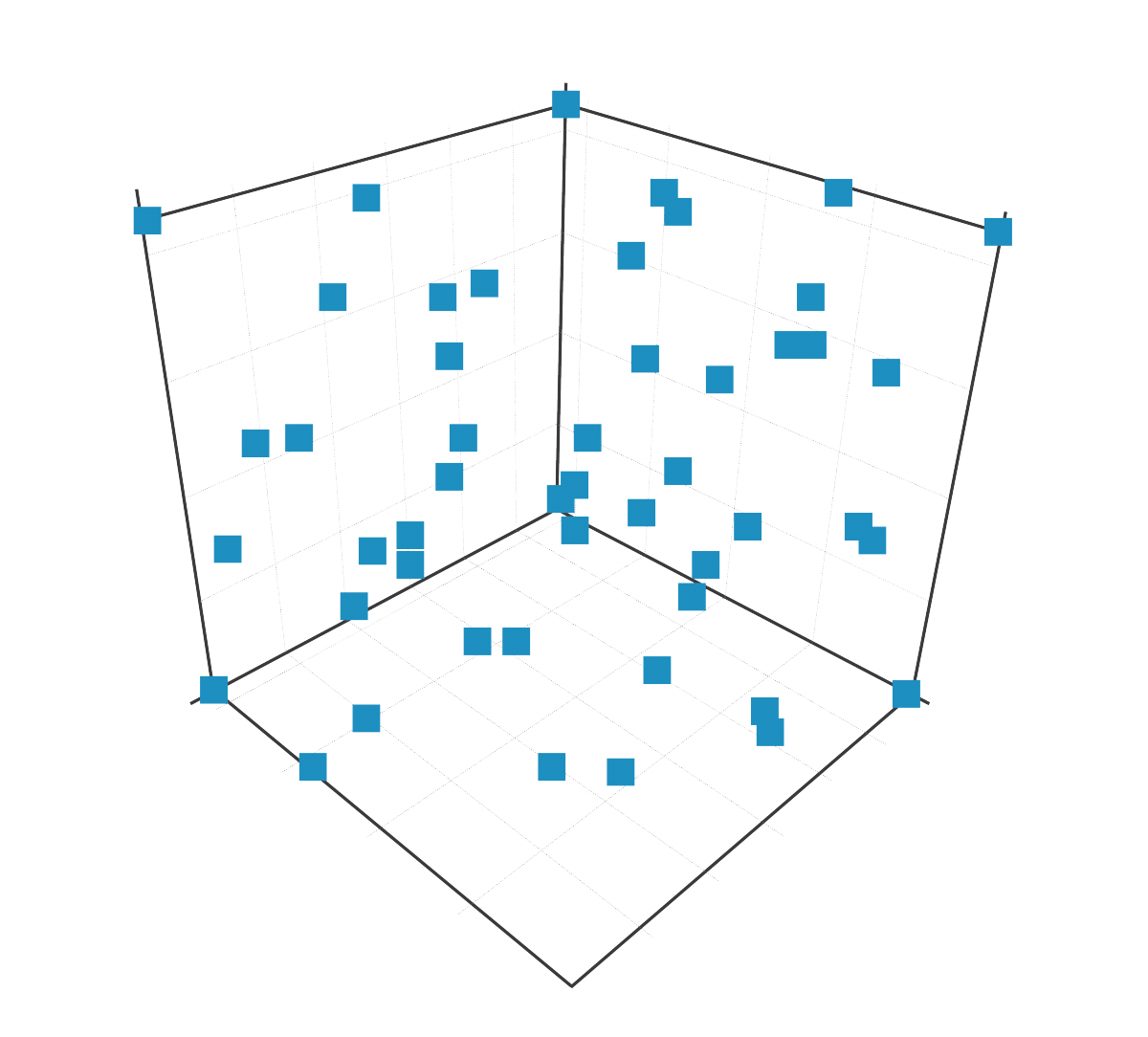
As a beginner, understanding which one is right for your needs can feel like an impossible task. If we take the approach of using three factors, the experimental protocol will start to define a cube rather than a rectangle. Sometimes your DOE factors do not behave the same way when you look at them together as opposed to looking at the factor impact individually.
The number of possible designs on offer can sometimes seem a bit overwhelming. As you can already tell, OFAT is a more structured approach compared to trial and error. Run the second experiment by varying time, to find the optimal value of time (between 4 and 24 hours). Change the value of the one factor, then measure the response, repeat the process with another factor. Plus, we will we have support for different types of regression models.




No comments:
Post a Comment